الجمعة، 19 أبريل 2024

Plant-Based Diets and Diabetes Risk: Which Foods, What Mechanisms?

Increasing recognition of the dire impact of poor nutrition on global cardiometabolic health has created new urgency to identify optimal diets to address these burdens. Among various outcomes, type 2 diabetes is particularly diet sensitive, serving as an obvious marker for a population’s nutritional health.


http://dlvr.it/T5lrDJ

Timing of Moderate to Vigorous Physical Activity, Mortality, Cardiovascular Disease, and Microvascular Disease in Adults With Obesity

OBJECTIVETo assess the association between timing of aerobic moderate to vigorous physical activity (MVPA) and risk of cardiovascular disease (CVD), microvascular disease (MVD), and all-cause mortality in adults with obesity and a subset with obesity and type 2 diabetes (T2D).RESEARCH DESIGN AND METHODSParticipants included adults with obesity (BMI ≥30 kg/m2) and a subset of those with T2D from the UK Biobank accelerometry substudy. Aerobic MVPA was defined as bouts of MVPA lasting ≥3 continuous minutes. Participants were categorized into morning, afternoon, or evening MVPA based on when they undertook the majority of their aerobic MVPA. The reference group included participants with an average of less than one aerobic MVPA bout per day. Analyses were adjusted for established and potential confounders.RESULTSThe core sample included 29,836 adults with obesity, with a mean age of 62.2 (SD 7.7) years. Over a mean follow-up period of 7.9 (SD 0.8) years, 1,425 deaths, 3,980 CVD events, and 2,162 MVD events occurred. Compared with activity in the reference group, evening MVPA was associated with the lowest risk of mortality (hazard ratio [HR] 0.39; 95% CI 0.27, 0.55), whereas afternoon (HR 0.60; 95% CI 0.51, 0.71) and morning MVPA (HR 0.67; 95% CI 0.56, 0.79) demonstrated significant but weaker associations. Similar patterns were observed for CVD and MVD incidence, with evening MVPA associated with the lowest risk of CVD (HR 0.64; 95% CI 0.54, 0.75) and MVD (HR 0.76; 95% CI 0.63, 0.92). Findings were similar in the T2D subset (n = 2,995).CONCLUSIONSAerobic MVPA bouts undertaken in the evening were associated with the lowest risk of mortality, CVD, and MVD. Timing of physical activity may play a role in the future of obesity and T2D management.


http://dlvr.it/T5lr23
الاثنين، 25 مارس 2024

Comment on Kutz et al. Comparative Cardiovascular Effectiveness and Safety of SGLT-2 Inhibitors, GLP-1 Receptor Agonists, and DPP-4 Inhibitors According to Frailty in Type 2 Diabetes. Diabetes Care 2023;46:2004–2014

Findings from a recent cohort study published in Diabetes Care (1), which included >740,000 individuals with type 2 diabetes (T2D) aged ≥65 years, demonstrated that both sodium glucose cotransporter 2 inhibitors (SGLT2i) and glucagon-like peptide 1 receptor agonists (GLP-1RAs) were associated with smaller numbers of cardiovascular events and death than dipeptidyl peptidase 4 inhibitors (DPP-4i), with the largest benefits being seen among frail people. Adverse events that affected frailer individuals were not more common with SGLT2i or GLP-1RAs than with DPP-4i (1).


http://dlvr.it/T4cnLx

A Special Thanks to the Reviewers of Diabetes Care

Diabetes Care calls on thousands of scientific and medical experts each year to review manuscript submissions. The editors of Diabetes Care sincerely appreciate the efforts of all our reviewers who volunteer their time and expertise to provide valuable feedback to ensure the consistently high quality of the research published in each issue. We would like to recognize the “top” reviewers—based on the number of reviews completed, timeliness, reliability, and quality—for their outstanding contributions and dedication to Diabetes Care.


http://dlvr.it/T4cn1r

الجمعة، 23 فبراير 2024

Waking Up to the Importance of Sleep in Type 2 Diabetes Management: A Narrative Review

For the first time, the latest American Diabetes Association/European Association for the Study of Diabetes (ADA/EASD) consensus guidelines have incorporated a growing body of evidence linking health outcomes associated with type 2 diabetes to the movement behavior composition over the whole 24-h day. Of particular note, the importance of sleep as a key lifestyle component in the management of type 2 diabetes is promulgated and presented using three key constructs: quantity, quality, and timing (i.e., chronotype). In this narrative review we highlight some of the key evidence justifying the inclusion of sleep in the latest consensus guidelines by examining the associations of quantity, quality, and timing of sleep with measures of glycemia, cardiovascular disease risk, and mortality. We also consider potential mechanisms implicated in the association between sleep and type 2 diabetes and provide practical advice for health care professionals about initiating conversations pertaining to sleep in clinical care. In particular, we emphasize the importance of measuring sleep in a free-living environment and provide a summary of the different methodologies and targets. In summary, although the latest ADA/EASD consensus report highlights sleep as a central component in the management of type 2 diabetes, placing it, for the first time, on a level playing field with other lifestyle behaviors (e.g., physical activity and diet), the evidence base for improving sleep (beyond sleep disorders) in those living with type 2 diabetes is limited. This review should act as a timely reminder to incorporate sleep into clinical consultations, ongoing diabetes education, and future interventions.


http://dlvr.it/T39tvg

A Diabetes Pregnancy Technology Roadmap: The 2023 Norbert Freinkel Award Lecture

Norbert Freinkel emphasized the need for “more aggressive therapy with exogenous insulin” during type 1 diabetes (T1D) pregnancy. Recent advances in diabetes technology, continuous glucose monitoring (CGM), and hybrid closed-loop (HCL) insulin delivery systems allow us to revisit Freinkel’s observations from a contemporary perspective. The Continuous Glucose Monitoring in Women With Type 1 Diabetes in Pregnancy Trial (CONCEPTT) led to international recommendations that CGM be offered to all pregnant women with T1D to help them meet their pregnancy glucose targets and improve neonatal outcomes. However, despite CGM use, only 35% of trial participants reached the pregnancy glucose targets by 35 weeks’ gestation, which is too late for optimal obstetric and neonatal outcomes. The constant vigilance to CGM data and insulin dose adjustment, with perpetual worry about the impact of hyperglycemia on the developing fetal structures, leave many pregnant women feeling overwhelmed. HCL systems that can adapt to marked gestational changes in insulin sensitivity and pharmacokinetics may help to bridge the gap between the nonpregnant time in range glycemic targets (70–180 mg/dL) and the substantially more stringent pregnancy-specific targets (TIRp) (63–140 mg/dL) required for optimal obstetric and neonatal outcomes. Use of HCL (CamAPS FX system) was associated with a 10.5% higher TIRp, 10.2% less hyperglycemia, and 12.3% higher overnight TIRp. Clinical benefits were accompanied by 3.7 kg (8 lb) less gestational weight gain and consistently achieved across a representative patient population of insulin pump or injection users, across trial sites, and across maternal HbA1c categories. Working collaboratively, women, HCL technology, and health care teams achieved improved glycemia with less worry, less work, and more positive pregnancy experiences.


http://dlvr.it/T39tgt

Comment on Li et al. Association of Serum Uric Acid With All-Cause and Cardiovascular Mortality in Diabetes. Diabetes Care 2023;46:425–433

We read with great interest the article by Li et al. (1) on the association of serum uric acid (SUA) with all-cause and cardiovascular mortality in adults with diabetes. Using nationally representative data from the U.S. National Health and Nutrition Examination Survey (NHANES), 1999–2018, this study enrolled a total of 7,101 patients with diabetes, with follow-up through 31 December 2019 (median follow-up 7.3 years). Based on a prospective cohort design, this study demonstrated that higher levels of SUA were associated with higher risks of all-cause and cardiovascular disease (CVD) mortality in diabetes.


http://dlvr.it/T39tRD

Impact of Canagliflozin on Kidney and Cardiovascular Outcomes by Type 2 Diabetes Duration: A Pooled Analysis of the CANVAS Program and CREDENCE Trials

OBJECTIVEThe study was undertaken because it was unknown whether the duration of type 2 diabetes modifies the effects of sodium–glucose cotransporter 2 inhibitor canagliflozin on cardiovascular (CV) and kidney outcomes.RESEARCH DESIGN AND METHODSThis post hoc analysis of the Canagliflozin Cardiovascular Assessment Study (CANVAS) Program (N = 10,142) and Evaluation of the Effects of Canagliflozin on Renal and Cardiovascular Outcomes in Participants With Diabetic Nephropathy (CREDENCE) trial (N = 4,401) evaluated hazard ratios and 95% CIs using Cox proportional hazards for the effects of canagliflozin on CV and kidney outcomes, including progression and regression of albuminuria over 5-year intervals of disease duration.RESULTSCanagliflozin had ranges of benefit across intervals of diabetes duration, with no heterogeneity for major adverse CV events, CV death or heart failure hospitalization, and kidney failure requiring therapy or doubling serum creatinine. Furthermore, canagliflozin reduced albuminuria progression and increased albuminuria regression with no interaction across all diabetes duration subgroups.CONCLUSIONSOur findings suggest that earlier treatment with canagliflozin confers consistent cardiorenal benefits to individuals with type 2 diabetes.


http://dlvr.it/T39tD4

Residential Address Amplifies Health Disparities and Risk of Infection in Individuals With Diabetic Foot Ulcers

OBJECTIVETo determine the association between social determinants of health (SDOH) and a diagnosis of diabetic foot ulcer (DFU) infection.RESEARCH DESIGN AND METHODSTargeted interrogation of electronic health record data using novel search engines to analyze individuals with a DFU infection during a 5-year period (2013–2017) was performed. We extracted geolocated neighborhood data and SDOH characteristics from the National Neighborhood Data Archive and used univariate and multiple logistic regression to evaluate associations with outcomes in the population with diabetes.RESULTSAmong 4.3 million people overall and 144,564 individuals with diabetes seen between 2013 and 2017, 8,351 developed DFU, of which cases 2,252 were complicated by a DFU infection. Sex interactions occurred, as men who experienced a DFU infection more frequently identified as having nonmarried status than their female counterparts. For the population with DFU infection, there were higher rates for other SDOH, including higher neighborhood disadvantaged index score, poverty, nonmarriage, and less access to physician/allied health professionals (all P < 0.01). In multiple logistic regression, those individuals who developed DFU infection came from neighborhoods with greater Hispanic and/or foreign-born concentrations (odds ratio 1.11, P = 0.015).CONCLUSIONSWe found significant differences in neighborhood characteristics driving a higher risk for DFU infection in comparisons with the grouping of individuals with diabetes overall, including increased risk for individuals with Hispanic and/or foreign-born immigration status. These data strongly support the need to incorporate SDOH, particularly ethnic and immigration status, into triage algorithms for DFU risk stratification to prevent severe diabetic foot complications and move beyond biologic-only determinants of health.


http://dlvr.it/T39t6B

الأربعاء، 24 يناير 2024

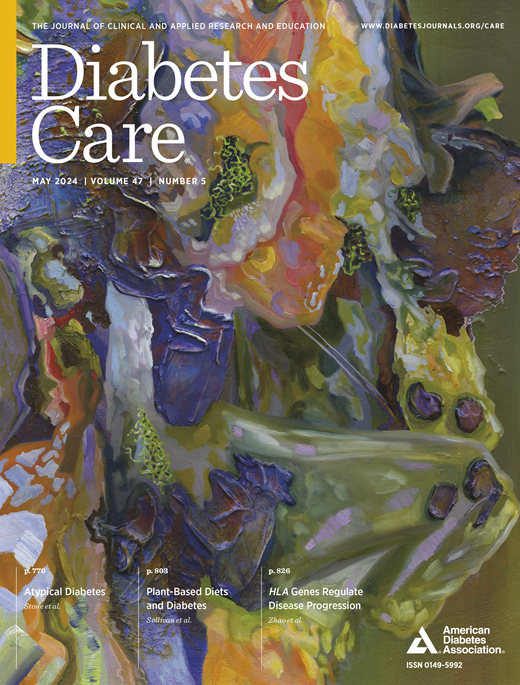
About the Artist: Laura Jacobsen, MD


http://dlvr.it/T1rNKf

Issues and Events


http://dlvr.it/T1rN9j

Personalizing Physical Activity for Glucose Control Among Individuals With Type 2 Diabetes: Are We There Yet?

Type 2 diabetes continues to be a major global pandemic. Despite tremendous efforts in prevention and treatment, it is projected that by 2050, type 2 diabetes will affect 1.3 billion people worldwide (1). Alarmingly, at the time of diagnosis, most affected individuals may have already developed complications such as cardiovascular disease, nerve damage, and kidney and eye diseases (2). Glycemic control is crucial for lowering the risks of these complications and of mortality and for improving general well-being for individuals living with type 2 diabetes (3–6). HbA1c is a key parameter for assessing glycemic control (7). A 1% absolute decrease in HbA1c is associated with a 15–20% reduction in cardiovascular complications (8), a 37% reduction in microvascular complications, and a 21% reduction in diabetes-related death (9). Engaging in a healthy lifestyle, including physical activity, is recommended as a strategy for glycemic management in affected individuals. The American Diabetes Association (ADA) and the World Health Organization recommend 150–300 min of moderate-intensity aerobic physical activity or 75–150 min of vigorous-intensity aerobic physical activity per week plus strength/resistance training two or more times a week for adults living with diabetes (10).


http://dlvr.it/T1rN1H

Response to Comment on Chen et al. Ultra-Processed Food Consumption and Risk of Type 2 Diabetes: Three Large Prospective U.S. Cohort Studies. Diabetes Care 2023;46:1335–1344

Fonds de Recherche du Québec–Santé10.13039/501100000156NIH


http://dlvr.it/T1rMpG